Inspired by a topic.
Why not divide the day into 10 metric hours, each hour 100 metric minutes, each minute 100 metric seconds? That how the metric system works.
Makes everything easier.
Right.
It would make everything easier. In fact, the French actually did this.
For some reason it never caught on.
Thursday, August 13, 2015


Tuesday, June 23, 2015
Another Crown Flash video
Youtube video
Starts here
The start of that video has a really strange video or two jets and an orb, which I have no explanation for at all.
Starts here
The start of that video has a really strange video or two jets and an orb, which I have no explanation for at all.
Sunday, June 21, 2015
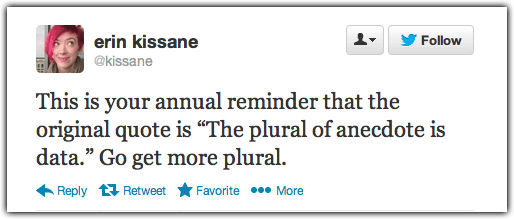
For the first time ever I linked to this blog
When responding to a blog post by the great Scott Adams.
Now I feel bad I have neglected this blog of late.
Now I feel bad I have neglected this blog of late.
660 views on the original blog entry before I linked to it.
Saturday, March 28, 2015
Sunday, March 22, 2015
Saturday, March 7, 2015
The amphidromic point, amphidromic systems
Good starting point - The dynamic theory of tides
1932 Bulletin of the National Research Council, Issues 77-80 (theorizes about multiple nodes for each harmonic)
Animation showing amphidromic systems and nodes - page where animation is from
Uni of Alaska
At and near the system's central point the tidal range is nil
The tidal range is zero at the amphidromic point and increases with distance from this point,
Principles of Tidal Sedimentology
Image from book
Elements of Marine Ecology
Essentials of Oceanography
Oceanography: An Invitation to Marine Science
Virginia Institute of Marine Science
page with many sources many no longer working
from an online Oceanography quiz
The center of an open-ocean tidal system is called a(n) __________.
(a) cotidal point
(b) amphidromic point
(c) ebb current
(d) tidal bore
(b) amphidromic point
1932 Bulletin of the National Research Council, Issues 77-80 (theorizes about multiple nodes for each harmonic)
Animation showing amphidromic systems and nodes - page where animation is from
Uni of Alaska
At and near the system's central point the tidal range is nil
The tidal range is zero at the amphidromic point and increases with distance from this point,
Principles of Tidal Sedimentology
Image from book
Elements of Marine Ecology
Essentials of Oceanography
Virginia Institute of Marine Science
page with many sources many no longer working
from an online Oceanography quiz
The center of an open-ocean tidal system is called a(n) __________.
(a) cotidal point
(b) amphidromic point
(c) ebb current
(d) tidal bore
(b) amphidromic point
The center of an open ocean tidal system is called a(n) __________.
(a) amphidromic center.
(b) cotidal center
(c) rotary center
(d) seiche
(e) tidal flux
(a) amphidromic center.
Due to the shape of the North Sea, it develops two amphidromic points.
(a) True
(b) False
(a) True
An amphidromic point is ____________.
(a) a "no tide" point in the ocean around which the tide crest rotates through one tidal cycle
(b) a place in the ocean where tides are highest
(c) a place in the ocean where tidal datum is displaced to the right (in the northern hemisphere),
or to the south (in the southern hemisphere)
(d) a "no tide" point at the coast where there is a daily high tide, but no low tide
(a) a "no tide" point in the ocean around which the tide crest rotates through one tidal cycle
New theory about currents (pdf)
(a) amphidromic center.
(b) cotidal center
(c) rotary center
(d) seiche
(e) tidal flux
(a) amphidromic center.
Due to the shape of the North Sea, it develops two amphidromic points.
(a) True
(b) False
(a) True
An amphidromic point is ____________.
(a) a "no tide" point in the ocean around which the tide crest rotates through one tidal cycle
(b) a place in the ocean where tides are highest
(c) a place in the ocean where tidal datum is displaced to the right (in the northern hemisphere),
or to the south (in the southern hemisphere)
(d) a "no tide" point at the coast where there is a daily high tide, but no low tide
(a) a "no tide" point in the ocean around which the tide crest rotates through one tidal cycle
New theory about currents (pdf)
Subscribe to:
Posts (Atom)